Open source · Apache 2.0 · Built for Kubernetes
One governed home for every package you build and pull
Entrepot hosts your own npm, PyPI, Docker, Helm, Apt, Yum and raw repositories and proxies the public ones, behind single sign-on. It adds GitLab CI publishing without stored secrets, vulnerability scanning with quarantine, and a Terraform provider for all of it.
- npm
- pip
- docker
- helm
- apt
- dnf
- curl
Features
Everything a platform team needs from a package manager
Like Nexus or Artifactory, but small enough to run anywhere and configured entirely as code.
Proxy every public registry
Pull-through caches for Docker Hub, ghcr.io, pypi.org, registry.npmjs.org, Debian and RPM mirrors and Helm repos. Concurrent misses collapse into one fetch, and cached content keeps serving when the upstream is down.
Read the docs →Storage per repository
Each repository picks its own blob store: a PVC, EBS, EFS or an S3 bucket (IRSA, MinIO, R2). Content is SHA-256 addressed and deduplicated across repositories.
Read the docs →Single sign-on
Keycloak or any OIDC provider for people, with group-based roles scoped to repository patterns. Scoped, expiring API tokens for service accounts.
Read the docs →GitLab CI without stored secrets
Jobs authenticate with their short-lived id_token. Trust policies match project, branch, environment and protected refs, so no registry password ever sits in a CI variable.
Read the docs →Scanning & quarantine
Trivy, Grype or any tool through a signed webhook: on upload, on proxy fetch, on demand and on a schedule. Results go back to GitLab as commit statuses and MR notes.
Read the docs →Dependency-confusion protection
Groups prefer hosted packages, so a public package can never shadow an internal name. Routing rules stop internal namespaces from being requested upstream at all.
Read the docs →Cleanup policies
Prune old pre-releases, evict cache nobody has downloaded in 90 days, keep the newest N. Every policy has a dry-run preview before it deletes anything.
Read the docs →Usage, activity & audit
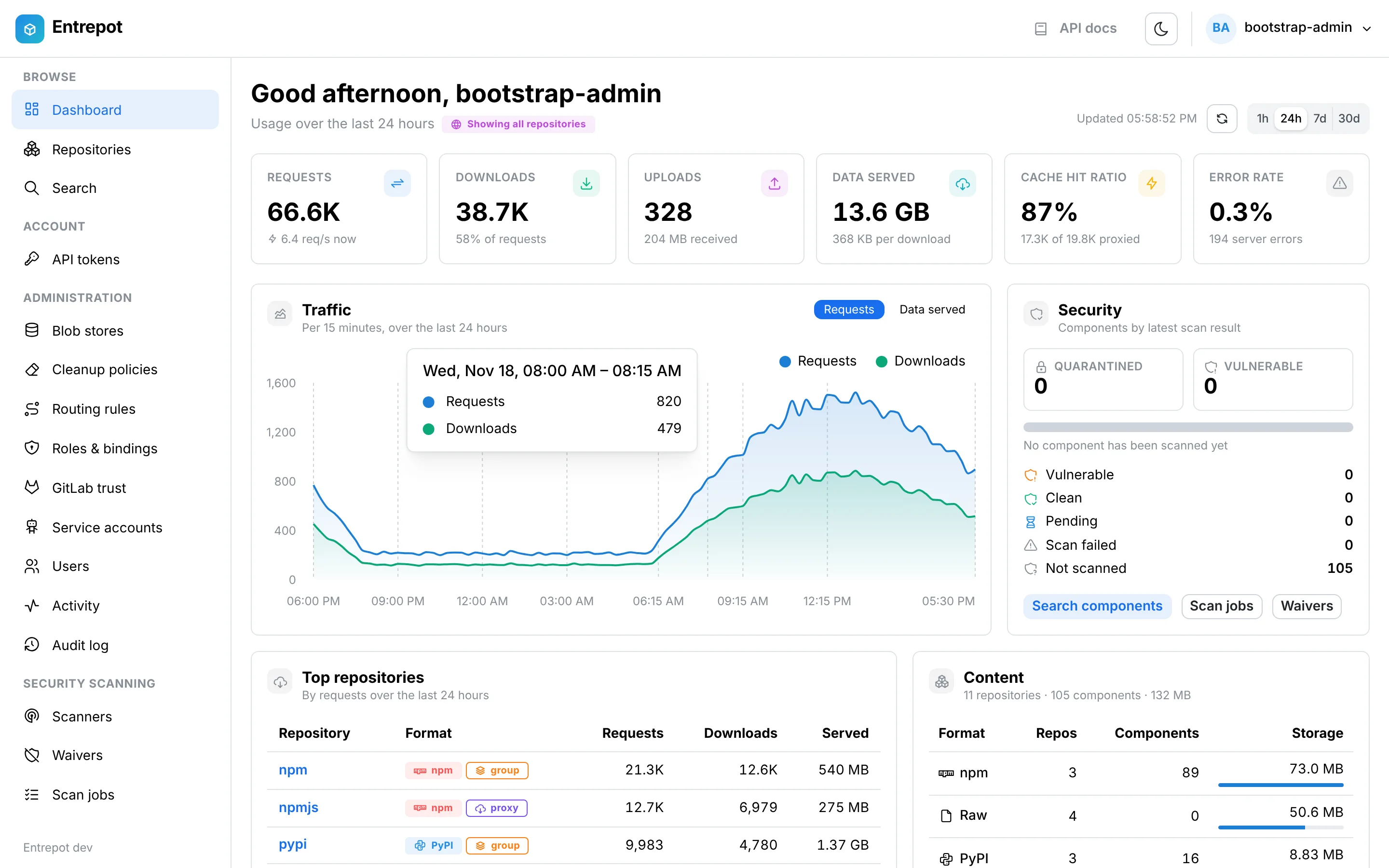
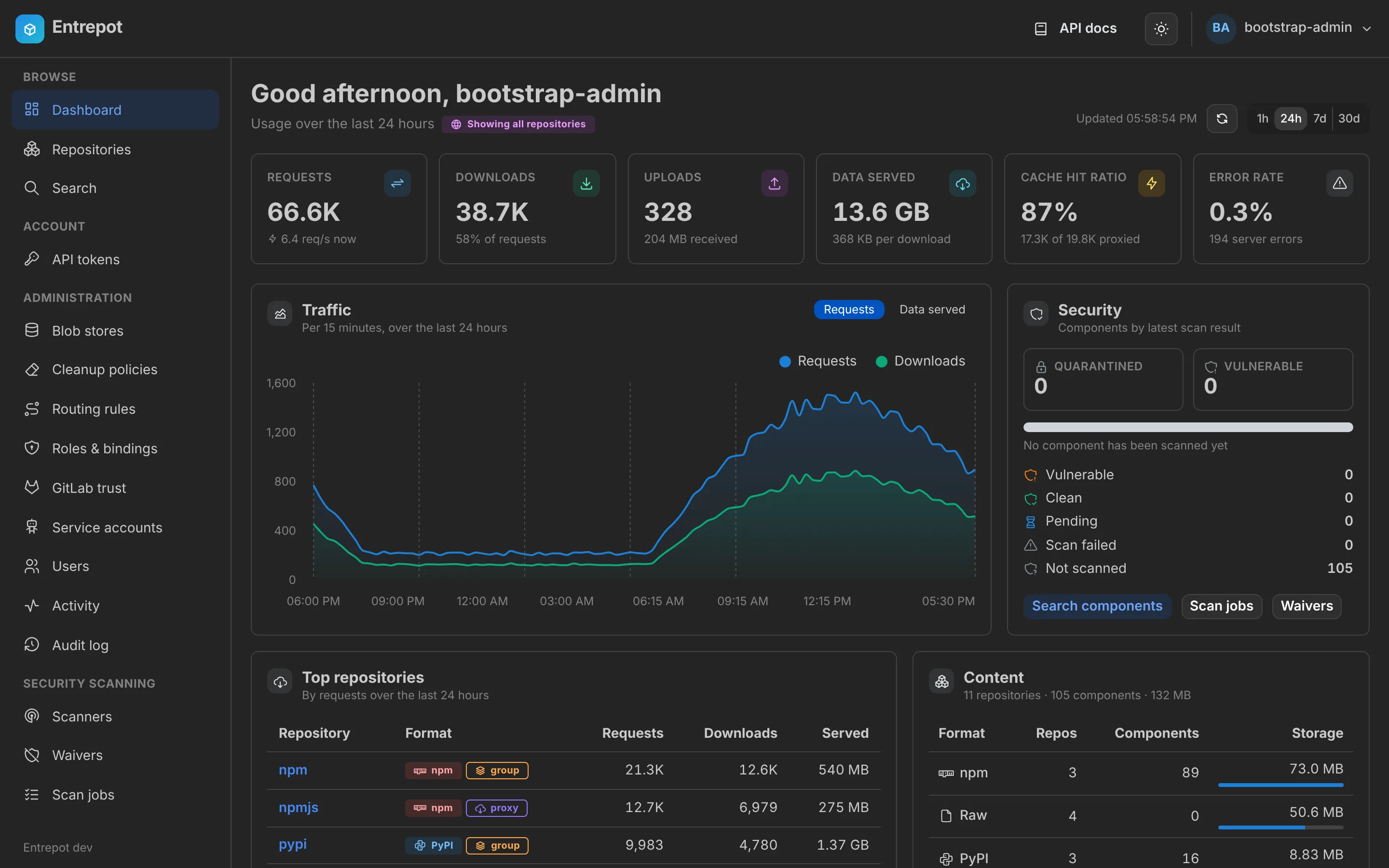
A dashboard of requests, bandwidth, cache hit ratio and top repositories for everyone, scoped to what they can read. Searchable activity and audit logs, plus Prometheus metrics.
Read the docs →Everything as code
A spec-first OpenAPI 3 API with Swagger UI, a generated Go client and a Terraform/OpenTofu provider covering every object, from blob stores to waivers.
Read the docs →Formats
Seven ecosystems behind one URL scheme
Hosted repositories hold what you publish. Proxies cache public registries. Groups merge several of them behind a single endpoint, preferring your own packages.
Native clients work unchanged. Point them at /repository/<name>/ and go.
Security
Stop vulnerable packages at the door
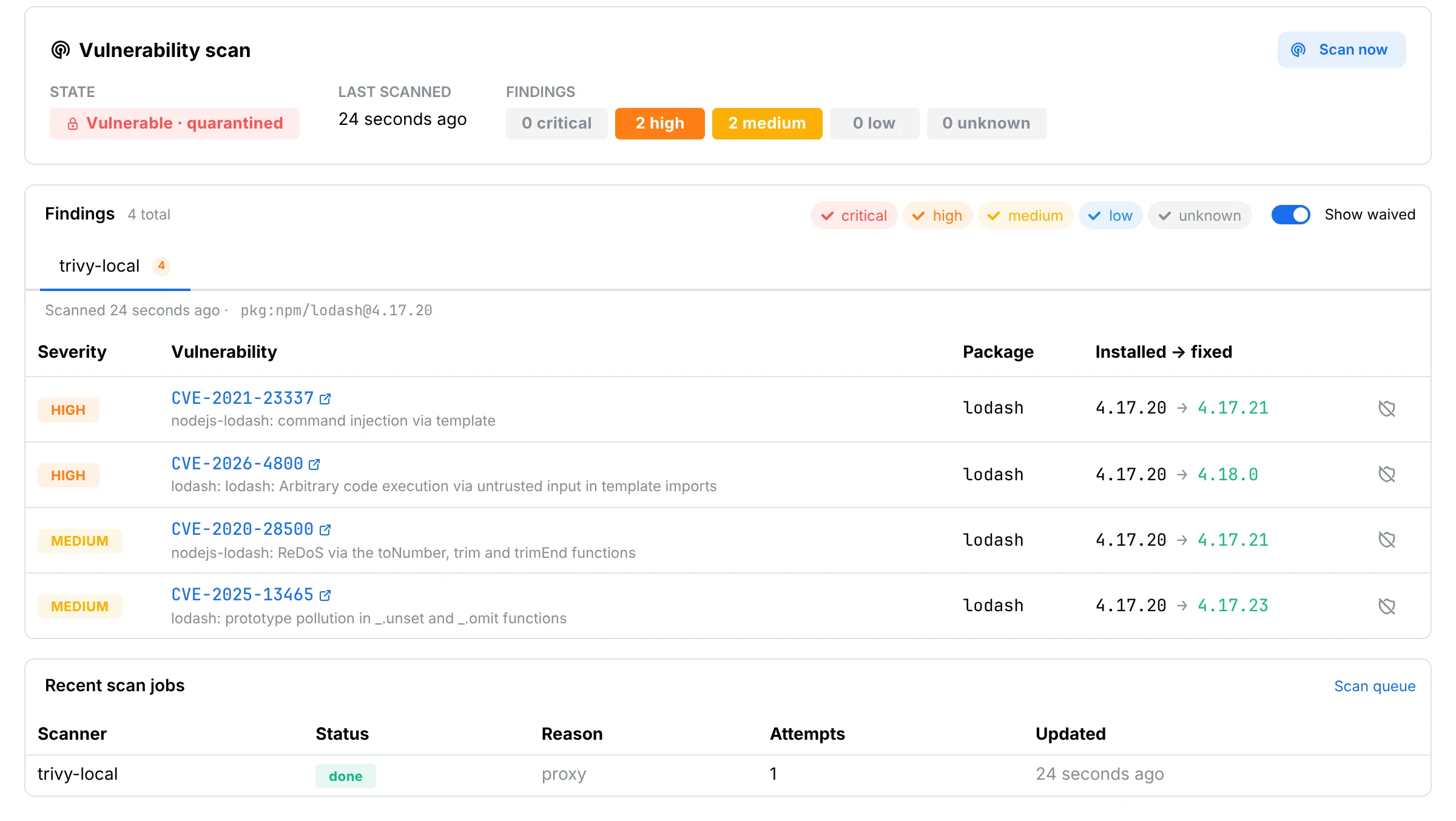
Scan on upload, on the first proxy fetch, on demand and on a schedule, with Trivy, Grype or your own scanner through a signed webhook. In quarantine mode a failing component simply can't be downloaded until it's fixed or an administrator records an expiring waiver.
- Per-repository policy: warn or quarantine, from a severity threshold up.
- Waivers with a reason and an expiry date, scoped by repository and component pattern.
- Feedback in GitLab: commit statuses and merge request notes on what was published.
- Signed Apt and Yum metadata, with a managed OpenPGP key per repository.
CI/CD
Publish from GitLab CI with no secrets to leak
GitLab signs a short-lived OIDC token for every job. Entrepot verifies it against your GitLab instance and matches its claims against trust policies, such as platform/** on a protected branch. A role binding then grants that policy write access to *-internal.
GitHub Actions and Jenkins work with scoped service-account tokens.
GitLab CI guidepublish:
image: node:22
id_tokens:
ENTREPOT_ID_TOKEN:
aud: https://entrepot.example.com
script:
- npm config set //entrepot.example.com/repository/npm-internal/:_authToken "$ENTREPOT_ID_TOKEN"
- npm publish --registry https://entrepot.example.com/repository/npm-internal/Product tour
A UI your developers will actually use
Browse what you can read, copy the client setup, and see exactly why a package was blocked.
See how the platform is used: requests, bandwidth, cache hit ratio and top repositories, scoped to what each user can read.
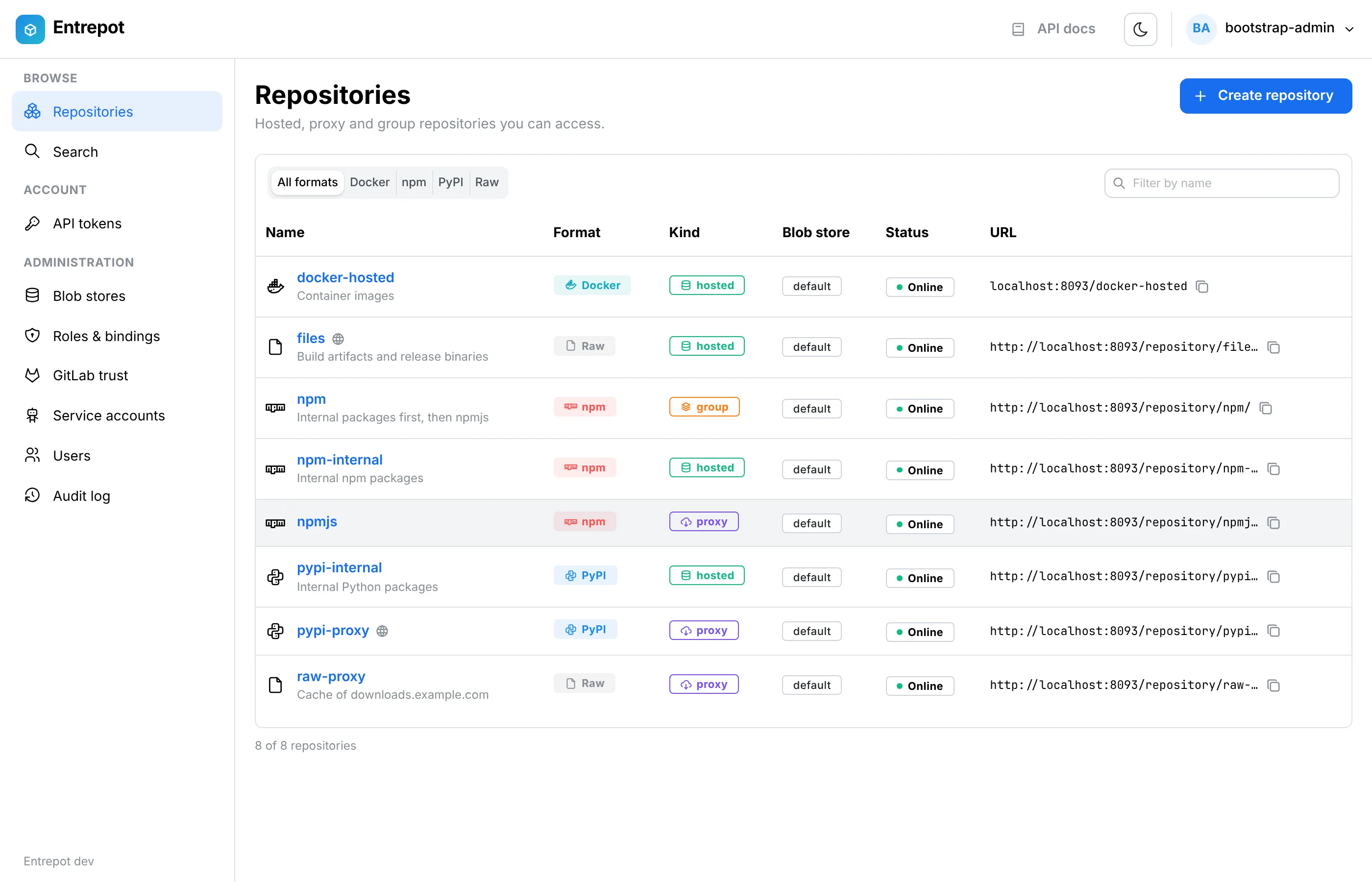
Hosted, proxy and group repositories for every format, side by side.
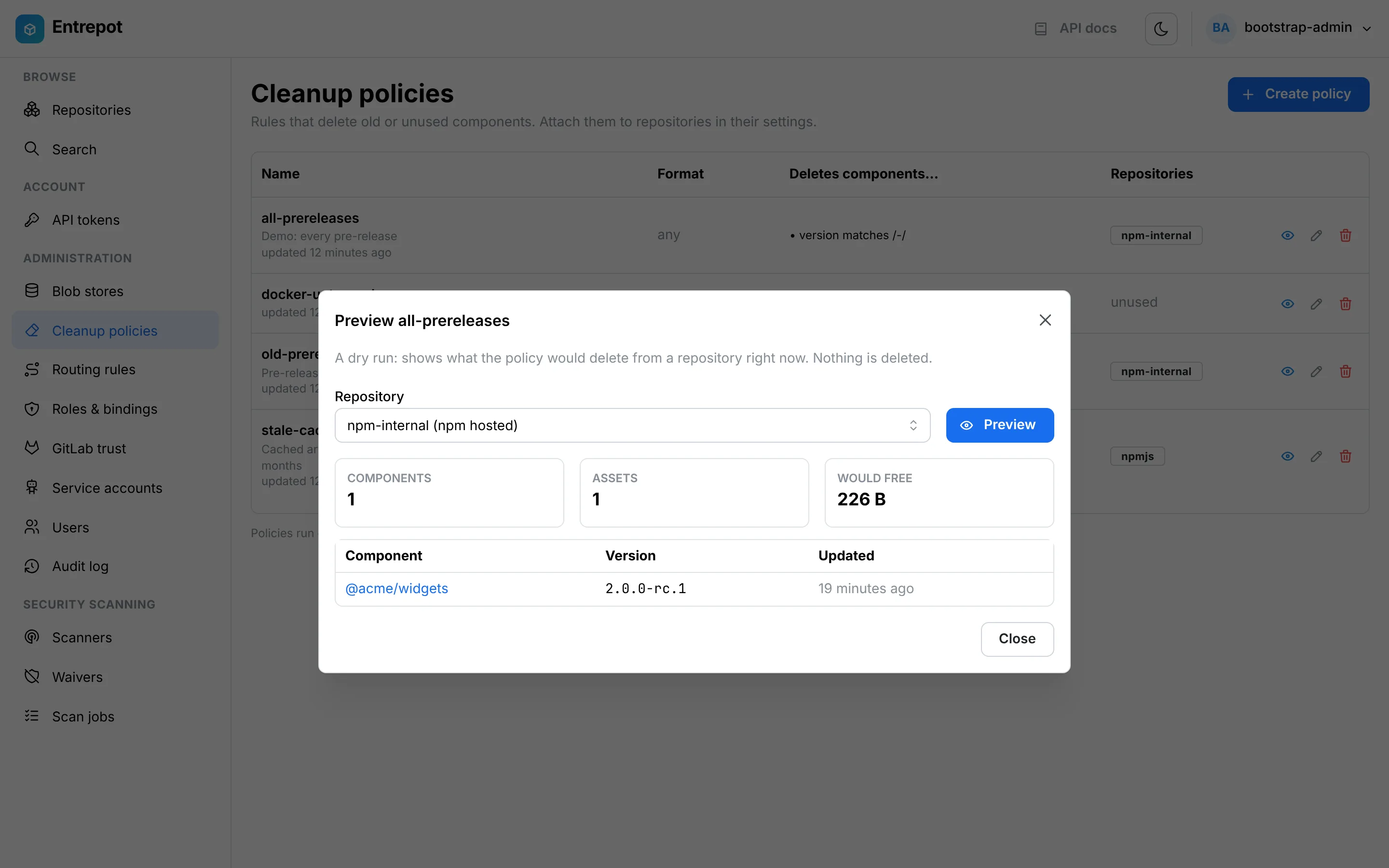
Every repository shows copy-paste client setup, for a laptop or for a GitLab CI job.
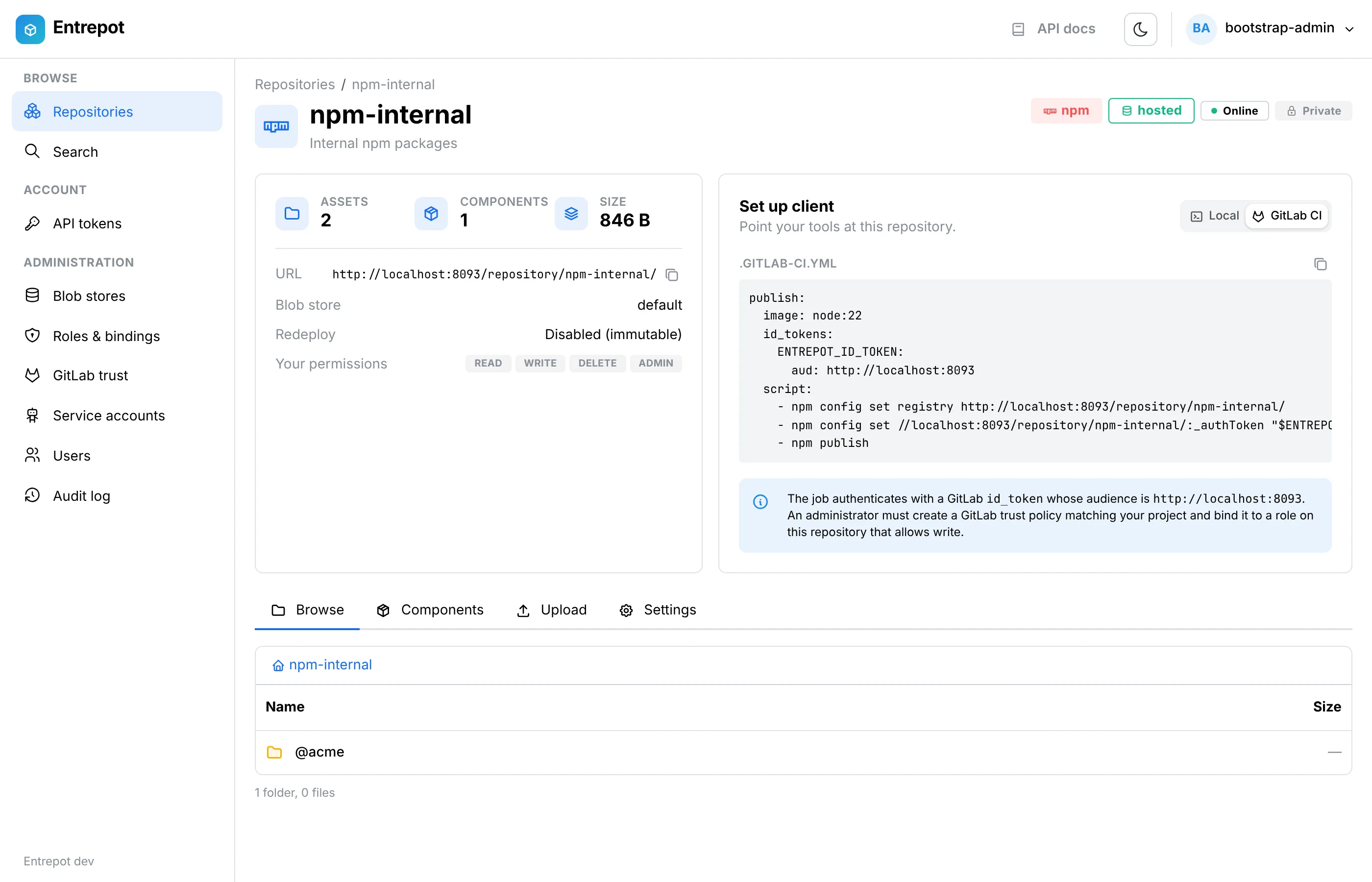
Trust policies decide which GitLab jobs may publish, matched on id_token claims.
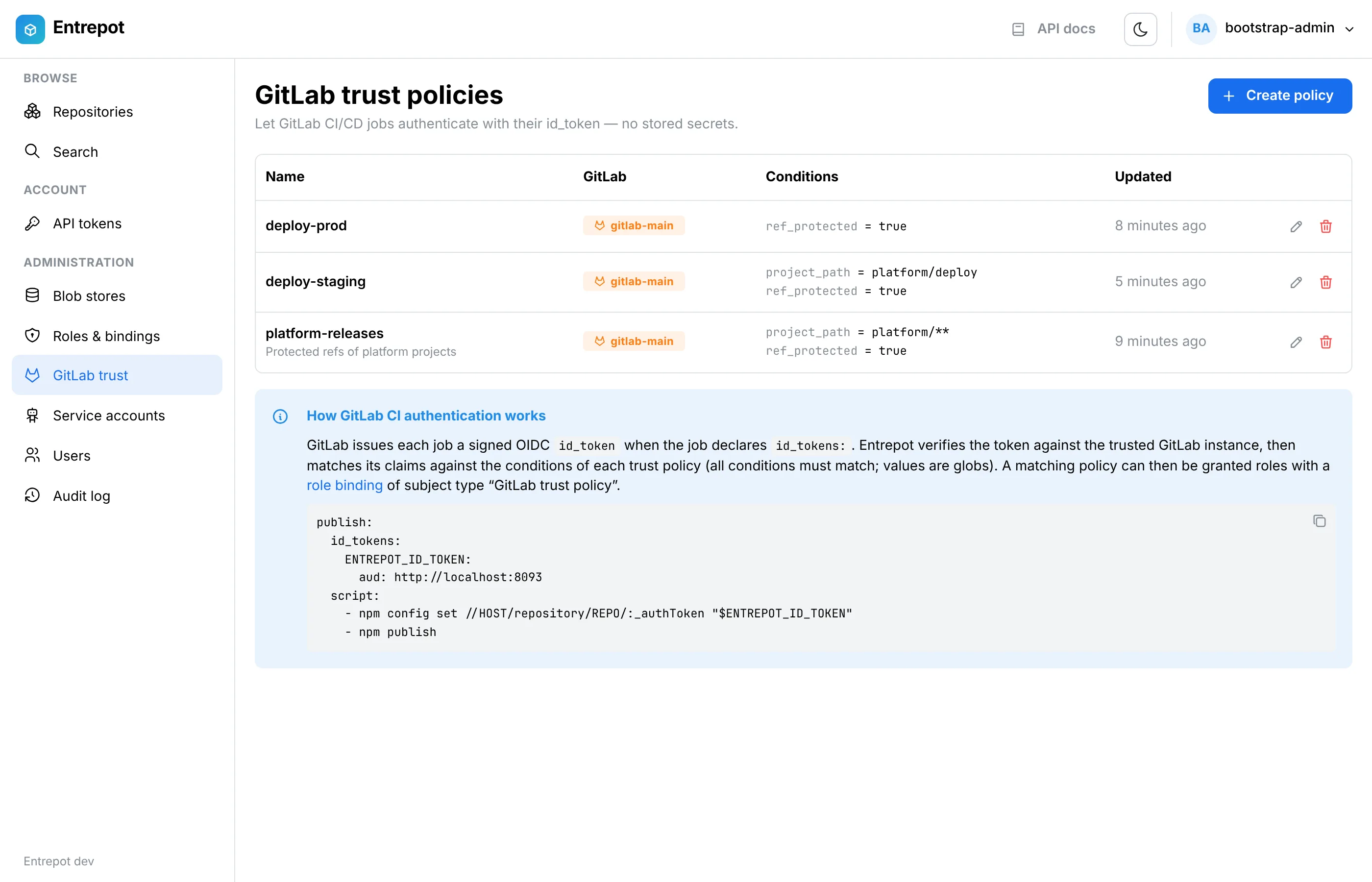
Test a routing rule before you rely on it: internal names never leave the building.
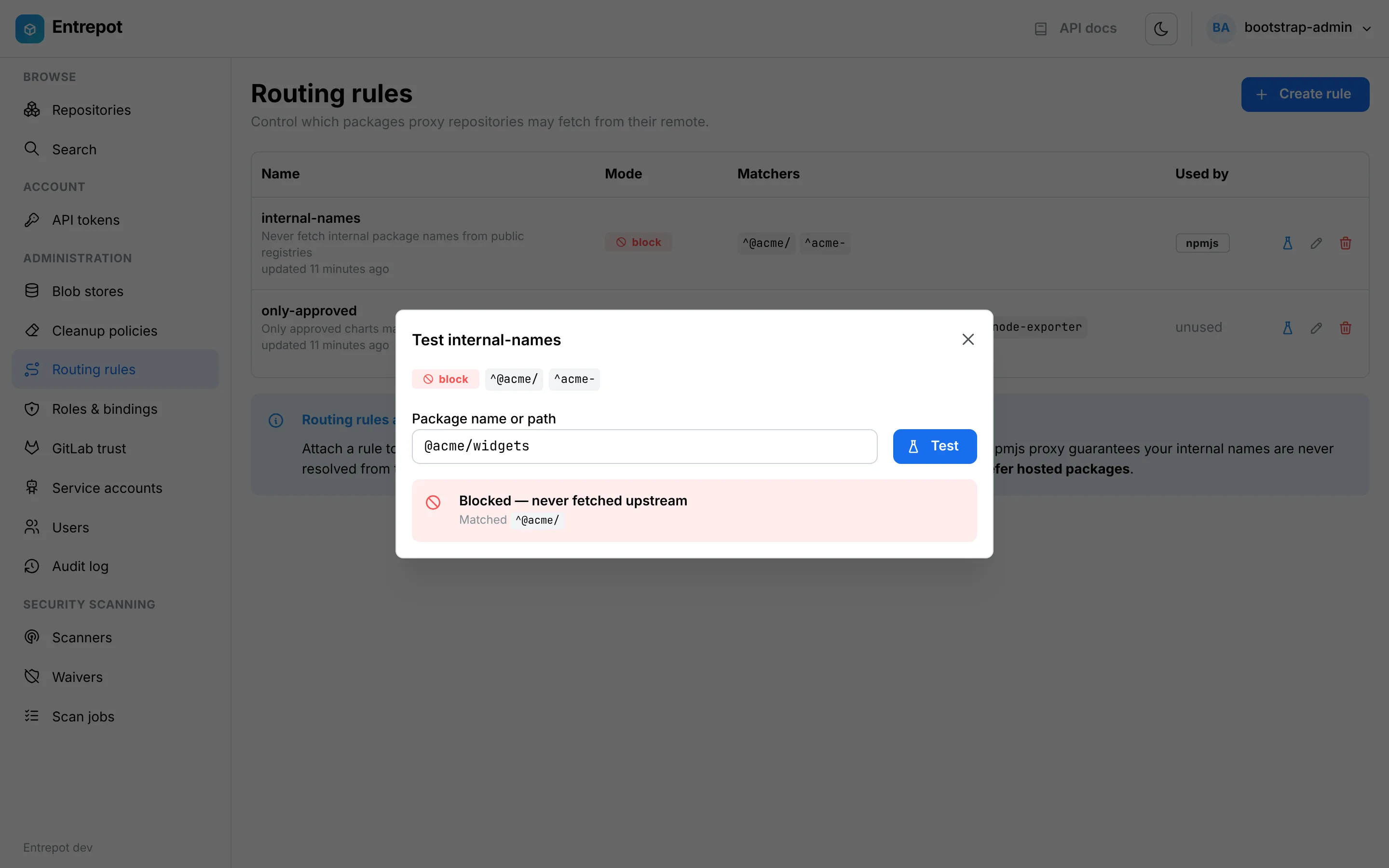
Preview exactly what a cleanup policy will remove before it runs.
Who changed what, from where. Filter it, or export it as CSV.
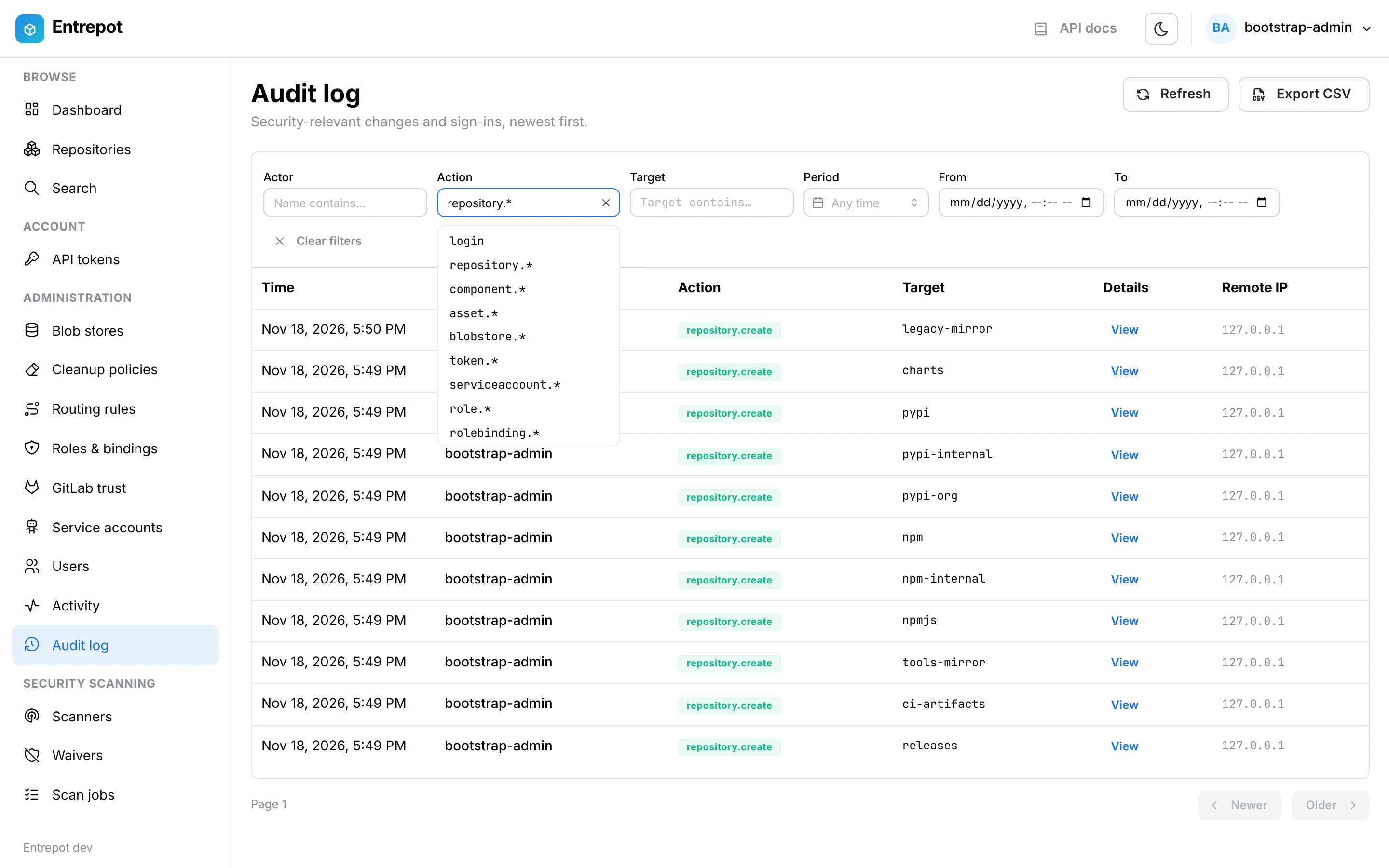
Everything as code
Review your package platform like any other change
Blob stores, repositories, roles, trust policies, scanners, waivers, cleanup and routing rules are all Terraform resources. The provider is published for both Terraform and OpenTofu.
- OpenAPI 3 contract with Swagger UI at
/api/docsand a generated Go client. - Stable names and idempotent PUTs: plans converge with no drift.
- Write-only secrets are encrypted at rest and never returned by the API.
resource "entrepot_repository" "npmjs" {
  name           = "npmjs"
  format         = "npm"
  kind           = "proxy"
  blob_store     = entrepot_blob_store.s3.name
  anonymous_read = true
  proxy = {
    remote_url   = "https://registry.npmjs.org"
    routing_rule = entrepot_routing_rule.internal_names.name
  }
  scan = {
    scanners           = [entrepot_scanner.trivy.name]
    mode               = "quarantine"
    severity_threshold = "critical"
  }
}

resource "entrepot_gitlab_trust_policy" "releases" {
  name   = "platform-releases"
  gitlab = "gitlab"
  conditions = {
    project_path  = "platform/**"
    ref_protected = "true"
  }
}
Bring your packages home
Install the Helm chart, point it at Postgres and your identity provider, and start proxying.
helm install entrepot oci://ghcr.io/entrepotproj/charts/entrepot \
  --namespace entrepot --create-namespace \
  -f values.yaml